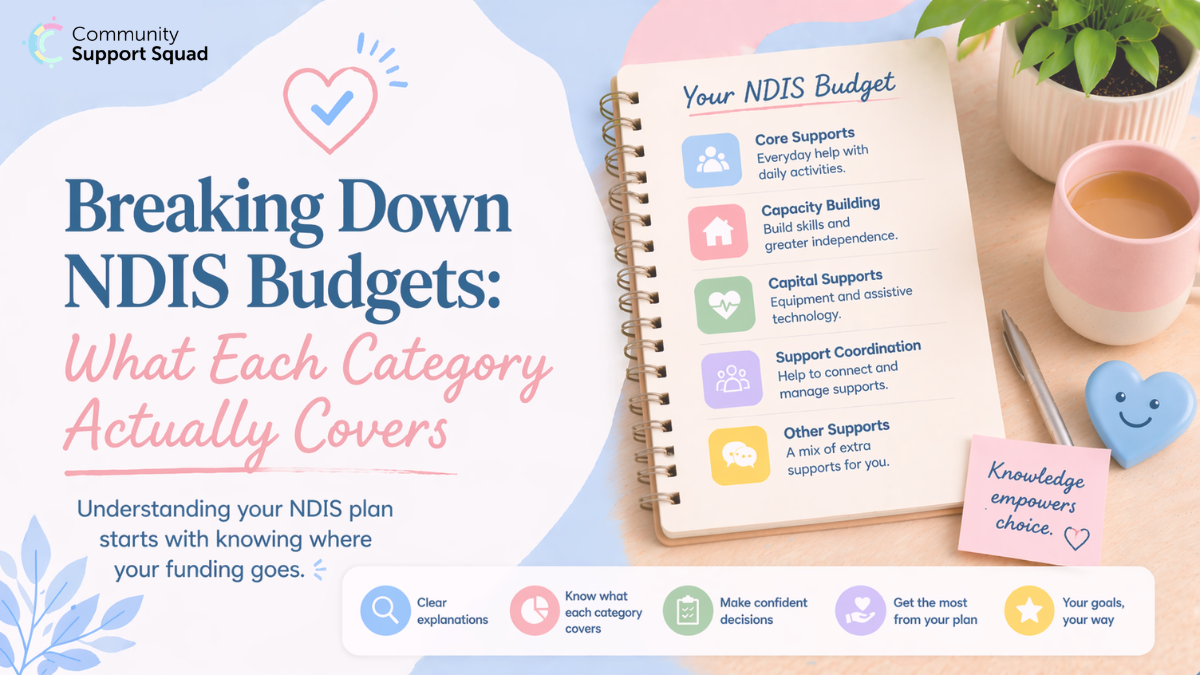
If you’ve ever looked at your NDIS plan and thought, “Great, I have funding… but what does all of this actually mean?” — you are not alone! Let’s clarify the three main budget categories in your plan: Core, Capacity Building, and Capital. We’ll break down what each one covers, what you can spend it on, and what the newer NDIS rules say about using your funding wisely (and legally 🙃).
🧱 1. Core Supports – The Everyday Essentials
Think: daily support, personal care, help with chores, and getting out and about or attending appointments.
This is the most flexible part of your plan. Core funding helps you with the things you need to live your day-to-day life and maintain your independence.
✅ You can use Core funding for:
- Support workers to help with personal care, shopping, meal prep, or going to appointments
- Community access and social support
- Transport (if funded in your plan)
- Low-cost assistive technology (under $1,500 like shower chairs, weighted blankets, etc.)
- Consumables (continence products, PPE, etc.)
- Supported independent living or short-term accommodation (if approved already in your plan)
⚠️ But be careful:
- Transport funding is often ‘stated’ – meaning you can’t move that money around. You’ll usually get it paid into your bank account regularly if you’re self-managing or plan-managing.
- If your plan says Core is “stated” or “restricted,” you might not be able to shift funds between categories (e.g. using community access funds for transport).
✨ Pro Tip: If your Core budget isn’t fully flexible, ask your Support Coordinator (hi!) to request more flexibility in your next plan review.
💡 2. Capacity Building – The Life-Improving Stuff
Think: building your independence, confidence, skills, and long-term success. This budget is all about progress and potential. It’s not for daily support—it’s for services that help you grow, learn, and achieve goals.
✅ You can use Capacity Building funding for:
- Psychology, counselling, or therapy (psychosocial recovery coaching, too!)
- Occupational therapy, speech therapy, physiotherapy, and assessments
- Social and community participation skill-building
- NDIS plan management fees
- Support coordination
- Employment-related supports and training
- Improved relationships and behaviour support
- Health and wellbeing supports (e.g. dietetics, exercise physiology)
⚠️ But keep in mind:
- This funding is not interchangeable between support areas. For example, if you have money for “Improved Daily Living,” you can’t use that to pay for Support Coordination.
- Some services must be delivered by registered providers only—especially behaviour support.
🌱 Capacity Building is your personal development budget. Think of it as an investment in your future.
🧠 3. Capital Supports – The Big-Ticket Items
Think: equipment, technology, home mods, or specialist accommodation.
Capital funding is for specific, often high-cost purchases that have to be quoted, assessed, and approved. No impulse buying here, folks.
✅ You can use Capital funding for:
- Assistive technology (AT) – like communication devices, wheelchairs, or bed rails
- Home modifications – ramps, handrails, accessible bathrooms
- Vehicle modifications
- Specialist Disability Accommodation (SDA) (if approved)
⚠️ Heads up:
- This funding is strictly stated – it’s only for the specific item or purpose listed in your plan.
- You’ll usually need assessments and quotes from allied health professionals (OTs are your best friend here).
- There’s a price cap for many items – don’t order anything before checking the NDIS AT Guidelines.
📦 Capital is like the Amazon wishlist of your plan – big, important, and needs approval first.
🚨 New NDIS Rulings You Should Know About
The NDIS has been tightening the reins on how funds are used lately. Here are a few of the current hot topics:
- No more “random” AT purchases: You must have a clear link to your goals, and appropriate evidence to back it up (sorry, no funding for gaming laptops unless they’re assistive tech 😉).
- Therapy animals, retreats, or wellness holidays? Usually not covered unless strongly justified, with heaps of evidence.
- Using your plan for family respite or cleaning services – possible, but only when directly linked to your disability and considered ‘reasonable and necessary’.
- More scrutiny on therapy sessions and long-term supports – NDIS wants to see outcomes, so regular reviews and progress reports are key.
💬 Final Thoughts
Use It or Lose It (Well, Not Really… But You Get Me)
NDIS plans are powerful when you know how to use them. Understanding your budgets—Core, Capacity, and Capital—helps you get the most out of your funding and avoid nasty surprises.
Still unsure what you can claim? That’s what we’re here for at Community Support Squad. We help you understand your plan, connect with the right services, and make sure every dollar is working for you, not sitting around looking pretty.
Want to chat through your plan, review your goals, or just ask if you can get that sensory swing?
📞 Give us a buzz – we’ve got your back!