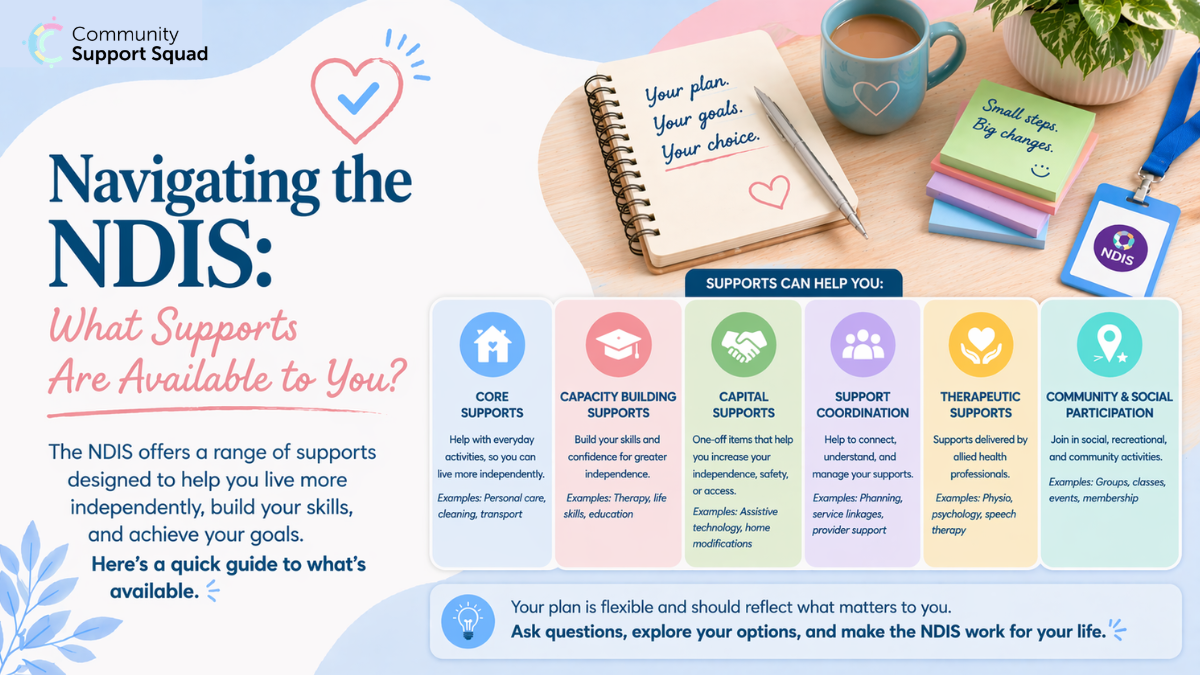
Helping you navigate the NDIS with confidence and clarity
A Guide for Participants to Understand NDIS Support Options
🧠 1. Behaviour Support
Reducing behaviours of concern & building quality of life
Supports may include:
- Functional Behaviour Assessments
- Positive Behaviour Support Plans (PBSPs)
- Support worker training
- Oversight of restrictive practices
👉 For participants with complex needs or behaviours that affect safety or daily life.
🧑⚕️ 2. Occupational Therapy (OT)
Helping you do the things that matter most – every day
Supports may include:
- Functional Capacity Assessments
- Assistive technology (mobility aids, comms devices)
- Home modifications
- Sensory regulation strategies
- Emotional regulation & mindfulness techniques
👉 For anyone needing support with independence, sensory needs, or day-to-day activities.
🦵 3. Physiotherapy
Supporting movement, mobility, and physical wellbeing
Supports may include:
- Exercise programs
- Mobility and gait training
- Equipment recommendations (e.g., wheelchairs)
- Postural support and pain management
👉 For participants with mobility challenges, chronic pain, or recovery goals.
🧍♀️ 4. Support Workers
Helping with daily tasks, connection, and community access
Supports may include:
- Personal care (showering, grooming, dressing)
- Meal prep & domestic tasks
- Transport to appointments
- Community and social engagement
👉 For anyone needing help at home or in the community.
🧳 5. School Leaver Employment Supports (SLES)
Bridging the gap from school to meaningful employment
Supports may include:
- Travel and job readiness training
- Work experience placements
- Life skills development
- Exploring career pathways
👉 For school leavers aged 16–22 building confidence for the workforce.
💬 6. Speech Therapy
Improving communication and safe eating/swallowing
Supports may include:
- Language and speech development
- Social interaction skills
- AAC devices
- Swallowing assessments
👉 For participants with communication delays or swallowing difficulties.
👥 7. Psychology & Mental Health Supports
Promoting emotional wellbeing, coping, and recovery
Supports may include:
- Therapy sessions
- Trauma-informed care
- Coping strategies and emotional regulation
- Cognitive and psychological assessments
👉 For those living with psychosocial disabilities, trauma, or mental health challenges.
👨⚕️ 8. Nursing (Including Community Nursing)
Support for complex or chronic medical needs
Supports may include:
- Medication administration
- PEG, catheter, and continence care
- Diabetes management
- Wound care and monitoring
👉 For participants who need specialised medical support at home.
🛠️ 9. Assistive Technology & Home Modifications
Tools and changes that support your independence
Supports may include:
- Wheelchairs, walkers, hoists
- Communication devices
- Bathroom and kitchen modifications
- Smart home automation
👉 For participants needing equipment or home changes to live safely and independently.
💼 10. Support Coordination & Psychosocial Recovery Coaching
Helping you implement your plan and reach your goals
Supports may include:
- Connecting you with the right providers
- Tracking and managing your budget
- Crisis support and goal planning
- Building skills to self-manage
👉 For participants needing help navigating their plan or those with psychosocial disability needing recovery-based coaching.
💡 Final Thoughts
Everyone’s NDIS plan is unique – and that’s exactly how it should be. The key is understanding what supports are out there and choosing the ones that align with your goals, lifestyle, and values.
If you’re feeling unsure about where to start or need help getting the most from your plan, we’ve got your back.
🤝 Contact Community Support Squad
We’re here to walk beside you.
📧 support@communitysupportsquad.com.au
📱 0448 067 408
🌐 www.communitysupportsquad.com.au