Living with a psychosocial disability can feel like walking a tightrope while juggling flaming swords… during a windstorm. Some days you’re steady and smashing goals; other days the world hits you sideways with zero warning.
That’s why having a mental health safety net matters — not as a “just in case,” but as a core support structure that helps you stay grounded, connected, and supported when life does its chaotic-life thing.
If you’re an NDIS participant (or supporting someone who is), here’s what creating a genuine, trauma-informed mental health safety net can look like.
What Is a “Mental Health Safety Net”?
A mental health safety net is the mix of supports, people, tools, and routines that help you stay safe, stable, and connected — especially when symptoms flare, life becomes overwhelming, or you feel yourself slipping into survival mode.
It’s not about “fixing” you.
It’s about supporting you, respecting your lived experience, and making sure you never have to navigate the hard days alone.
Why It Matters
A strong safety net can help you:
- Manage stress before it spirals
- Stay engaged with therapy and supports
- Build emotional regulation skills
- Reduce hospital admissions or crisis episodes
- Maintain routines even on low-capacity days
- Feel safer and more in control
It’s about stacking little protective layers around you — like bubble wrap, but for your mental health.
The Key to a Solid NDIS Mental Health Safety Net
Here are the supports that actually make a difference (and yes — the NDIS can fund many of these):
1. Psychosocial Recovery Coaching (PRC)
A good PRC isn’t just a worker — they’re your thought-partner, reality-checker, crisis-co-pilot, and “we’re doing this together” person.
PRCs help you:
- Understand your mental health needs
- Build coping strategies
- Set achievable goals
- Reduce overwhelm
- Navigate services without feeling lost
- Stay connected, even when motivation is low
Trauma-informed PRCs also understand:
- Emotional withdrawal
- Fight/flight/freeze responses
- Avoidance as a protective strategy
- Shame, fear, or sensory overload
PRC = support with dignity, not pressure.
2. Psychology and Counselling
A big part of a safety net is having people who help you:
- Process trauma
- Navigate triggers
- Challenge unhelpful thoughts
- Build self-awareness
- Strengthen coping tools
Whether it’s fortnightly therapy or short-term goal-focused work, stability in your therapeutic supports is everything.
3. Occupational Therapy (OT) for Mental Health
Most people think OTs only do home mods or equipment…
But psychosocial OTs? Absolute game changers.
They help with:
- Emotional regulation skills
- Sensory strategies
- Executive functioning supports
- Daily routine building
- Community access planning
- Fatigue and anxiety management
They work with your lived experience — not against it.
4. Support Coordination
A Support Coordinator helps tie everything together so you don’t have to chase providers, explain your story 400 times, or try to decode the NDIS at 11pm while crying into your Milo.
Your SC can help you:
- Understand and use your plan
- Connect with the right services
- Advocate for your needs
- Prepare for plan reviews
- Monitor whether supports are actually helping
Good coordination = less chaos, more clarity.
5. Social and Community Participation
Humans need connection — no exceptions.
(Yes, even if social anxiety tells you otherwise.)
NDIS-funded community supports can include:
- Group activities
- Art or music groups
- Social outings
- Skill-building programs
- Safe places to connect
The goal isn’t forced socialising — it’s safe belonging.
6. Crisis and Contingency Planning
This is a huge trauma-informed must-have.
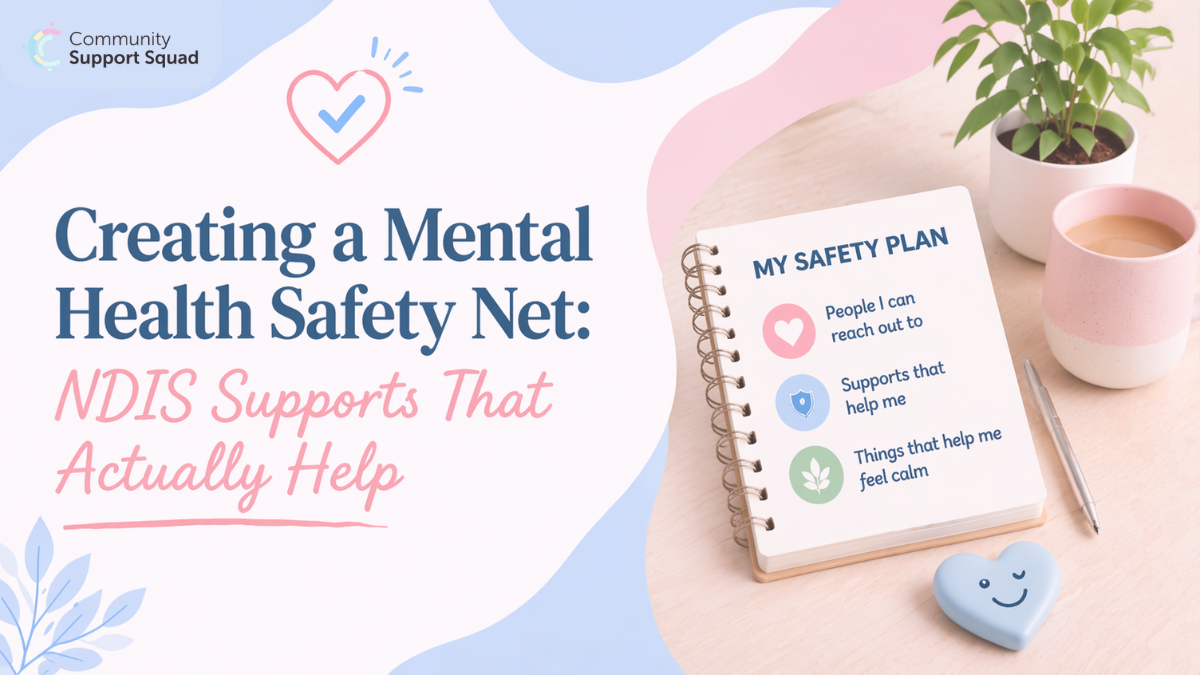
A proper safety plan should include:
- Warning signs you’re starting to struggle
- Your personalised grounding techniques
- Who to contact when overwhelmed
- A plan for what’s helpful and what’s not
- Emergency contacts
- A list of professional supports
- Step-by-step actions for hard days
This prevents panic decisions during panic moments.
7. Routine & Daily Living Supports
When mental health dips, basic tasks become mountains.
Supports that help include:
- Support workers for day-to-day structure
- Assistance building meal routines
- Help with errands
- Community access
- “Body doubling” for motivation
- Transport supports for appointments
These aren’t luxuries — they are protective factors.

How the NDIS Fits Into All This
The NDIS funds mental health support under the umbrella of psychosocial disability, and your safety net might be made of:
- Core supports (support workers, community participation)
- Capacity building supports (therapy, PRC, skill building)
- Coordination supports (Support Coordination or Specialist SC)
Your safety net should be personalised to your needs, goals, trauma history, and preferred ways of coping.
If it doesn’t feel safe?
It’s not a safety net — it’s a checklist someone else created. And we don’t do that here.
Creating Your Own Safety Net: Where to Start
Here are a few gentle steps:
- Write a list of “what helps when I’m overwhelmed”
- Identify early warning signs
- Talk with your PRC or SC about gaps in your supports
- Review your routines — which ones support your wellbeing?
- Create a crisis plan that feels realistic and compassionate
- Build a small network of professionals you trust
- Schedule regular check-ins (with supports or yourself)
You don’t need to build everything at once. Tiny steps count.
Final Thoughts: You Deserve a Safety Net That Actually Supports You
You’re not “too much.”
You’re not “difficult.”
You’re not “failing.”
Your brain has lived through things. Your story matters. Your needs matter.
A mental health safety net isn’t a luxury — it’s a foundation for stability, empowerment, and hope.
And with the right mix of supports (plus a bit of compassion for yourself), you really can build a life that feels safer, softer, and more manageable — even on the hard days.